Which materials can the 1250 mesh calcium carbonate grinding machine be applied to?
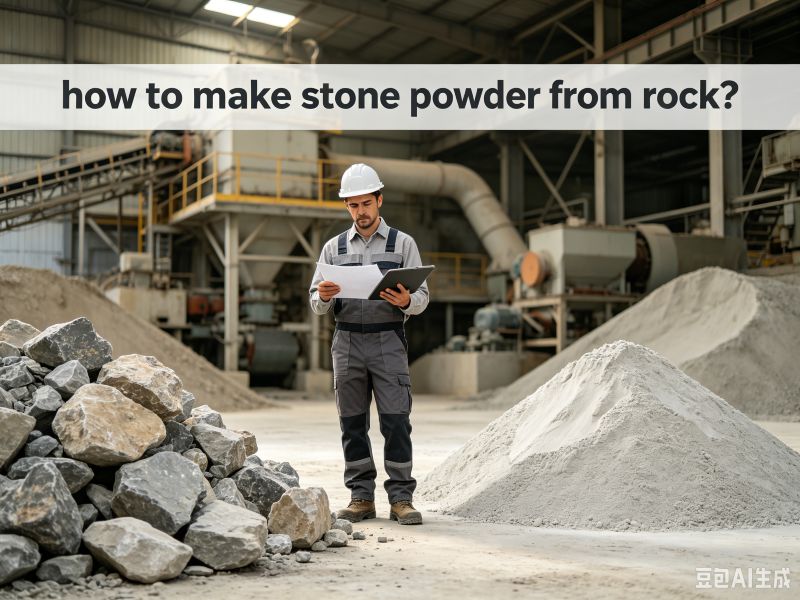
The 1250 mesh calcium carbonate grinding machine can not only be used for grinding calcium carbonate, but also can be applied to the following materials: calcite, limestone, sericite, talc, marble, dolomite, diabase, carbon black, barite, etc.
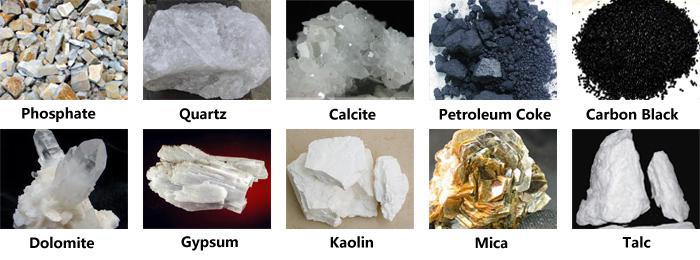
The characteristics of the materials used in 1250 mesh calcium carbonate mill are:
Hardness
Mohs ≤ 6 (heavy-duty up to 7–9.3)
Moisture
≤ 6% (ideally <3% for 1250#)
Feed requirement
Brittle · Non-flammable · Non-explosive
The working principle and internal structure of the 1250 mesh calcium carbonate grinding machine
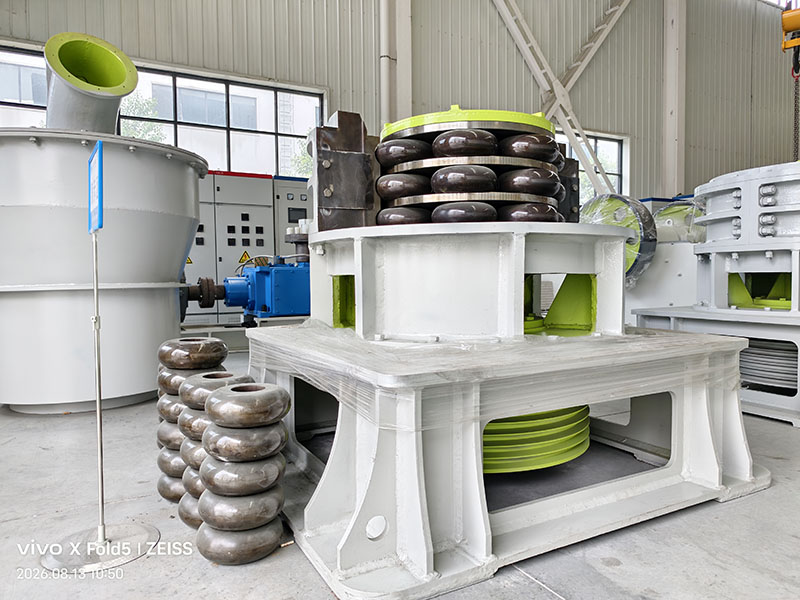
300-3000 mesh adjustable discharge
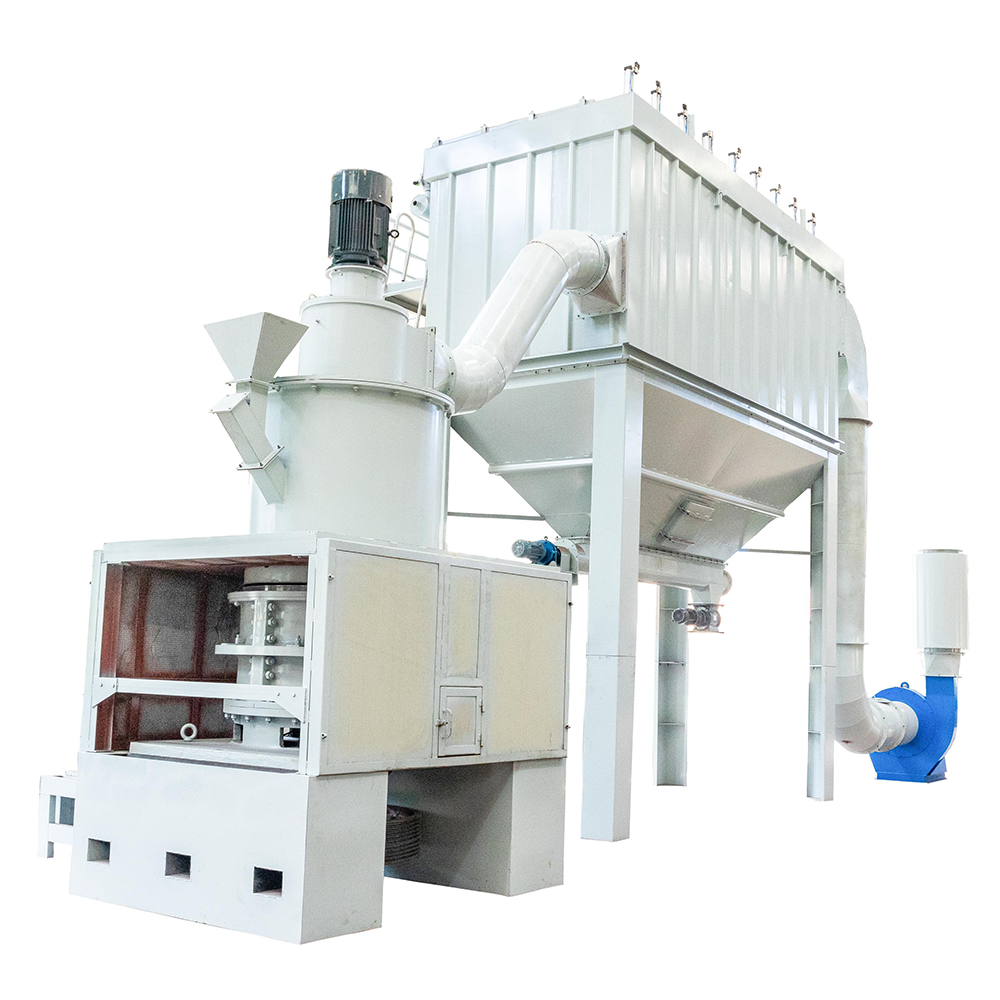
Cronus’ 1250 mesh calcium carbonate mill
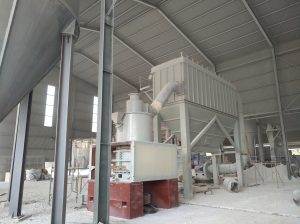
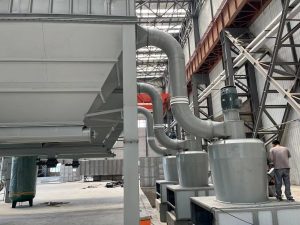
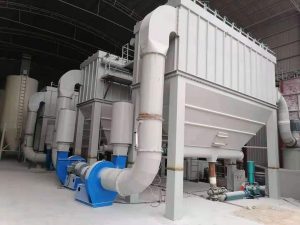
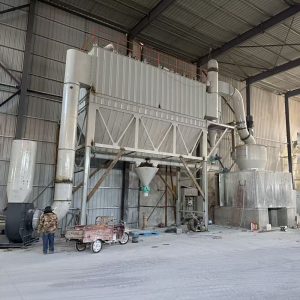
Technical parameters of the 1250 mesh calcium carbonate mill
FAQ About 1250 mesh calcium carbonate mill
Q1. What is an ultra-fine grinding mill?
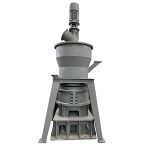
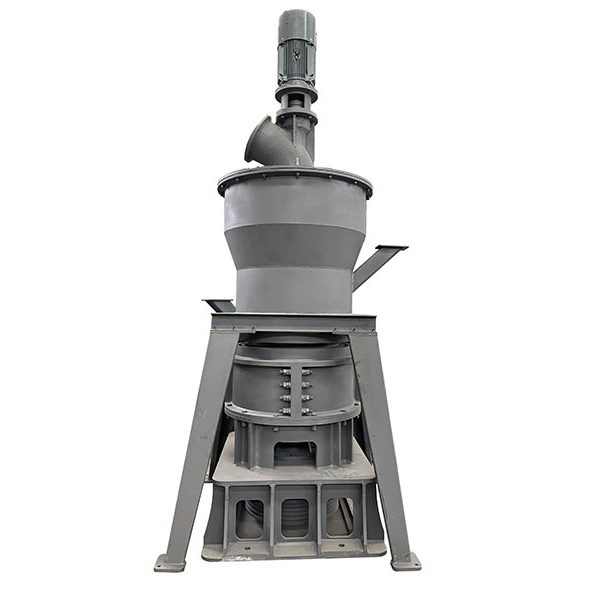
An ultra-fine grinding mill (ring-roller micro powder mill) is a high-efficiency grinding machine that produces super-fine powder from minerals such as calcium carbonate, barite, talc, gypsum, kaolin and graphite. It is an upgraded version of the Raymond mill with a modernized structure — the grinding rollers press material against the grinding ring, while an air classifier continuously separates finished powder, giving up to 15% more capacity and over 50% lower wear-part cost than a conventional Raymond mill.
Q2. What materials can it process?
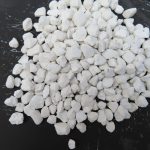
It handles more than 100 kinds of non-flammable, non-explosive minerals: calcite, limestone, dolomite, kaolin, bentonite, talc, mica, barite, gypsum, graphite, carbon black, wollastonite, illite, sepiolite and more. Materials must have a Mohs hardness of ≤7 (some models ≤8) and feed moisture of ≤6%.
Q3. What fineness can it achieve?
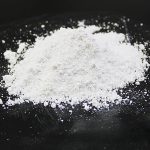
Finished fineness is continuously adjustable from 150 to 3000 mesh (about 74 to 5 μm), with D97 precision classification. It can consistently produce powders below 10 μm — much finer than a ball mill (which is efficient only down to about 0.074 mm / 200 mesh) or a standard Raymond mill (practical ceiling around 425–600 mesh).
Q4. What is the capacity range?
Output depends on the model. For the CRGM series: CRGM 80 ≈ 0.5–5.5 t/h, CRGM 90 ≈ 0.8–6.5 t/h, CRGM 100 ≈ 1.2–10 t/h, CRGM 125 ≈ 2.5–20 t/h, CRGM 1680 ≈ 5–45 t/h. At the same fineness and installed power, capacity is roughly double that of a ball mill, jet mill or stirred mill.
Q5. What are the feed size and site requirements?
Max feed size is typically ≤20–40 mm (pre-crushing with a jaw/hammer crusher is recommended for larger rock). Installation needs a stable concrete foundation, adequate height clearance for the classifier and cyclone system, and a dust-collection connection. Footprint ranges from about 14–32 m in length depending on model.
Q6. How is the powder fineness adjusted?
Fineness is controlled by the speed of the air classifier and the air volume: higher classifier speed = finer powder. The operator adjusts it on the control panel (variable-frequency drive) without stopping the mill, letting one machine cover 150–3000 mesh for different customer specs.
Q7. What’s the difference between an ultra-fine mill and a Raymond mill?
A Raymond mill is best for medium grinding (about 80–425 mesh) and is economical for coarse powder. An ultra-fine mill is built specifically for fine to super-fine grinding (325–3000 mesh): it has a higher-efficiency multi-blade classifier, tighter grinding gap, and higher output per kWh at fine sizes. For 2500-mesh calcium carbonate or similar, the ultra-fine mill is the correct choice.
Q8. What’s the difference between an ultra-fine mill and a ball mill?
A ball mill has lower initial investment but high energy consumption (roughly 15–30 kWh/t even at coarse sizes, and far higher when chasing fine powder), plus it’s inefficient below 200 mesh. An ultra-fine mill uses bed-compression rolling (less friction loss), needs less floor space, produces much finer powder, and is typically 30–50% more energy-efficient for fine grinding — so it’s favored by powder plants producing 600–3000 mesh products.
Q9. What is the energy consumption and operating cost?
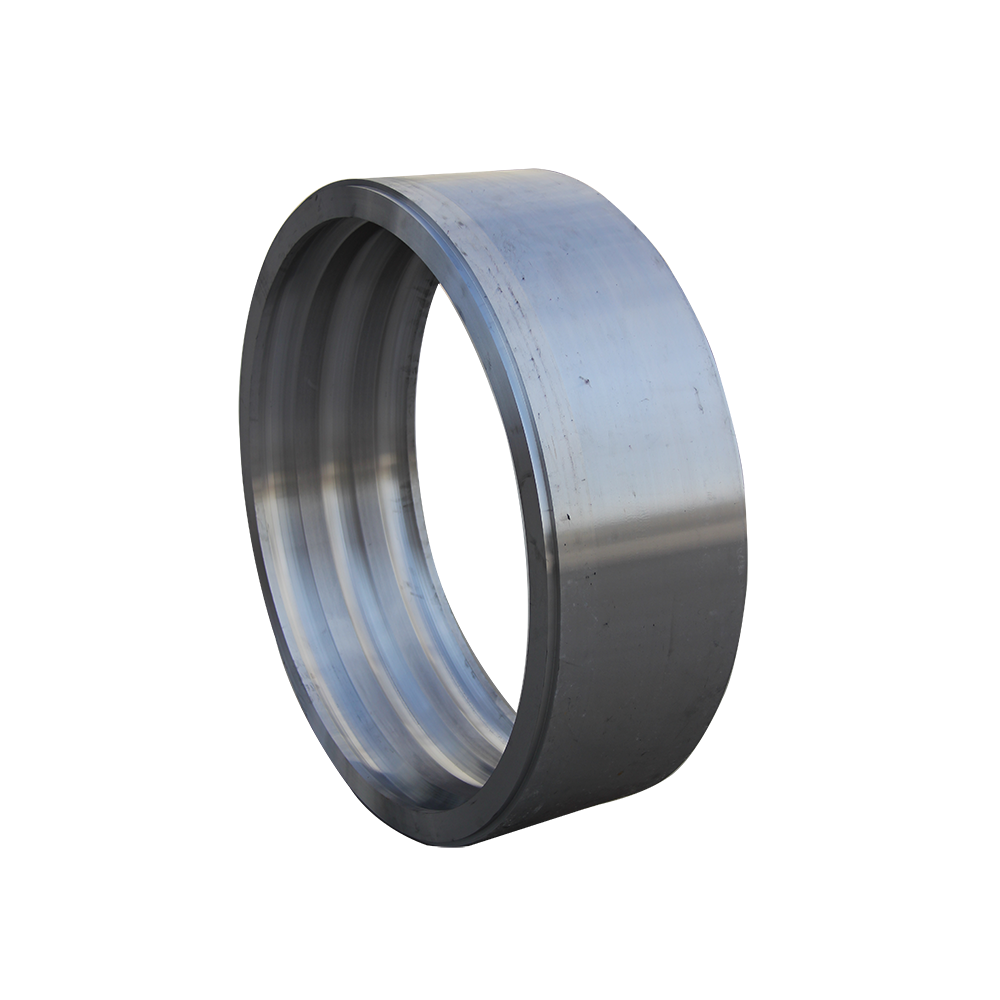
For ultra-fine targets, specific energy is generally in the range of roughly 50–80 kWh/t depending on material hardness and fineness — higher than coarse grinding, but far lower than a ball mill or jet mill chasing the same fineness. Wear parts are mainly the grinding roller and grinding ring; HGM’s design gives a typical service life of several thousand hours, and replacing them is quick and low-cost because of the bolted modular design.
Q10. What after-sales support and commissioning do you provide?
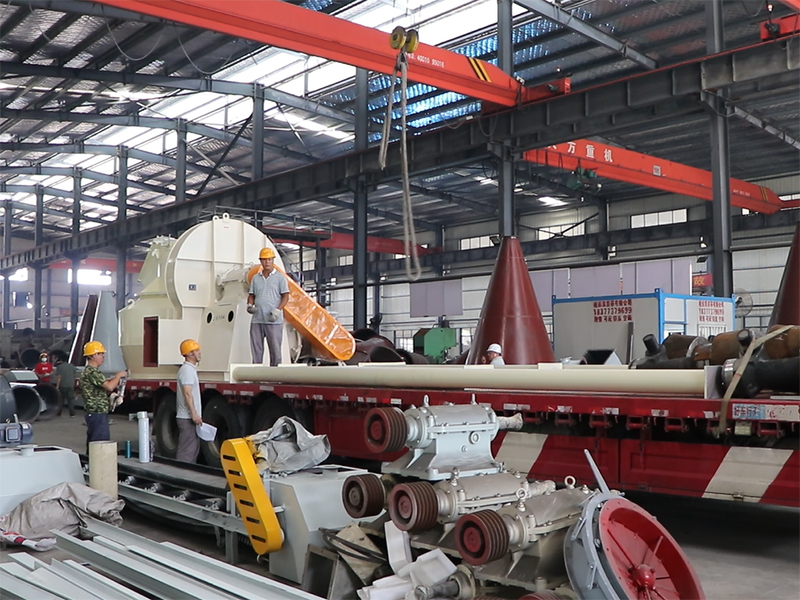
Supply includes complete machine + classifier + cyclone + dust collector + blower + control cabinet. We provide: pre-sale material test grinding to confirm fineness and capacity, site layout drawing, foundation drawing, engineer-guided installation and commissioning, operator training, and a spare-parts package (grinding rollers, rings, and classifier blades). Warranty and 24/7 technical support by WhatsApp/email are included.