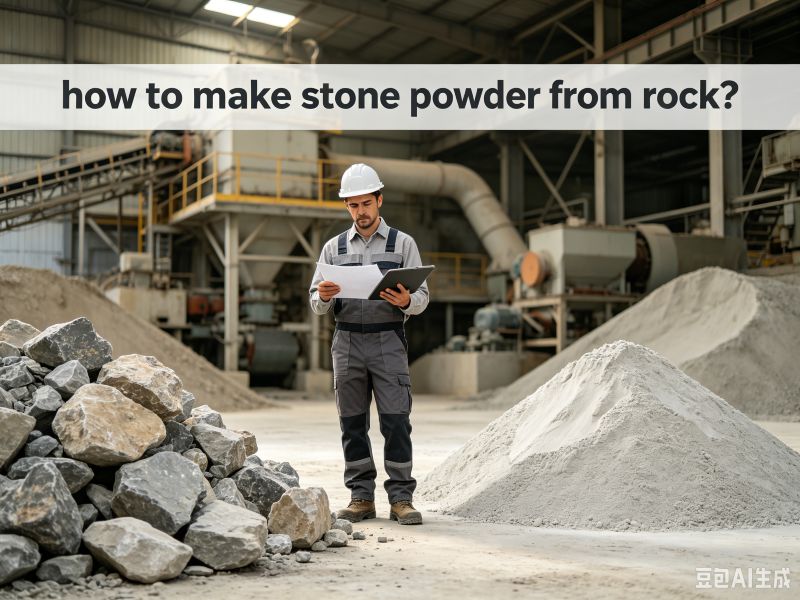
Stone powder production follows a multi-stage closed-circuit process, from raw rock crushing to fine grinding, precision classification and final packaging. The exact equipment and process are determined by raw material properties, target fineness and required capacity. Below is the standard industrial flow for non-metallic ores (limestone, calcite, marble, talc, barite, etc.)
Stone powder production follows a multi-stage closed-circuit process, from raw rock crushing to fine grinding, precision classification and final packaging. The exact equipment and process are determined by raw material properties, target fineness and required capacity. Below is the standard industrial flow for non-metallic ores (limestone, calcite, marble, talc, barite, etc.)
. Raw Material Preparation & Primary Crushing
The first step reduces large quarry rocks into grindable feedstock.
- Raw material requirements: Mohs hardness ≤7, moisture content ≤6% (wet material causes blockage and reduces grinding efficiency).
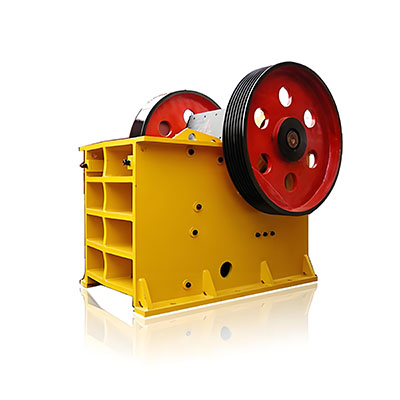
- Primary crushing: Large boulders (200–500 mm) are fed into a jaw crusher, which compresses and breaks them into 10–30 mm small fragments.
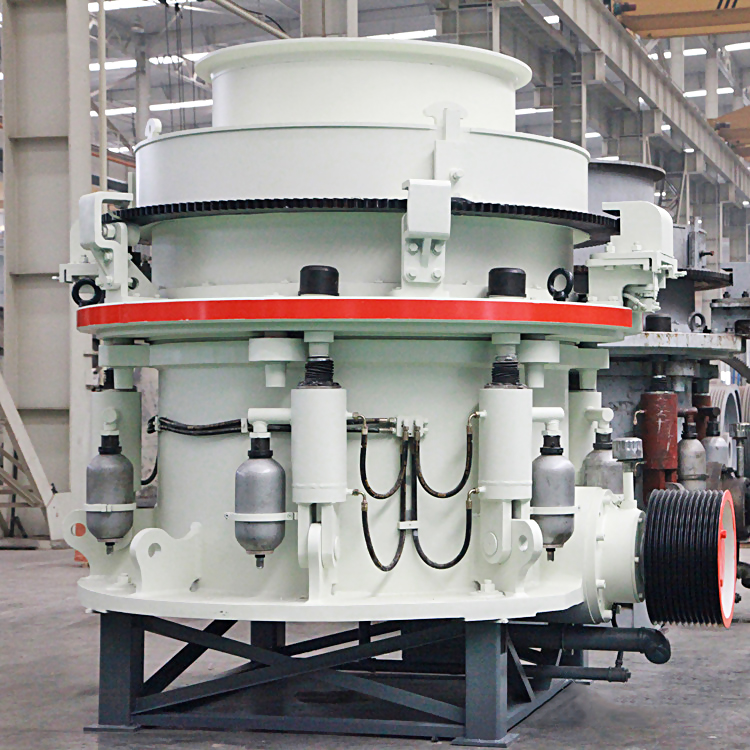
- Secondary crushing (optional): For harder materials or finer feed size, a cone crusher further reduces particles to 3–10 mm.
- Material handling: Crushed stone is lifted by a bucket elevator to an overhead storage hopper, ready for controlled feeding.
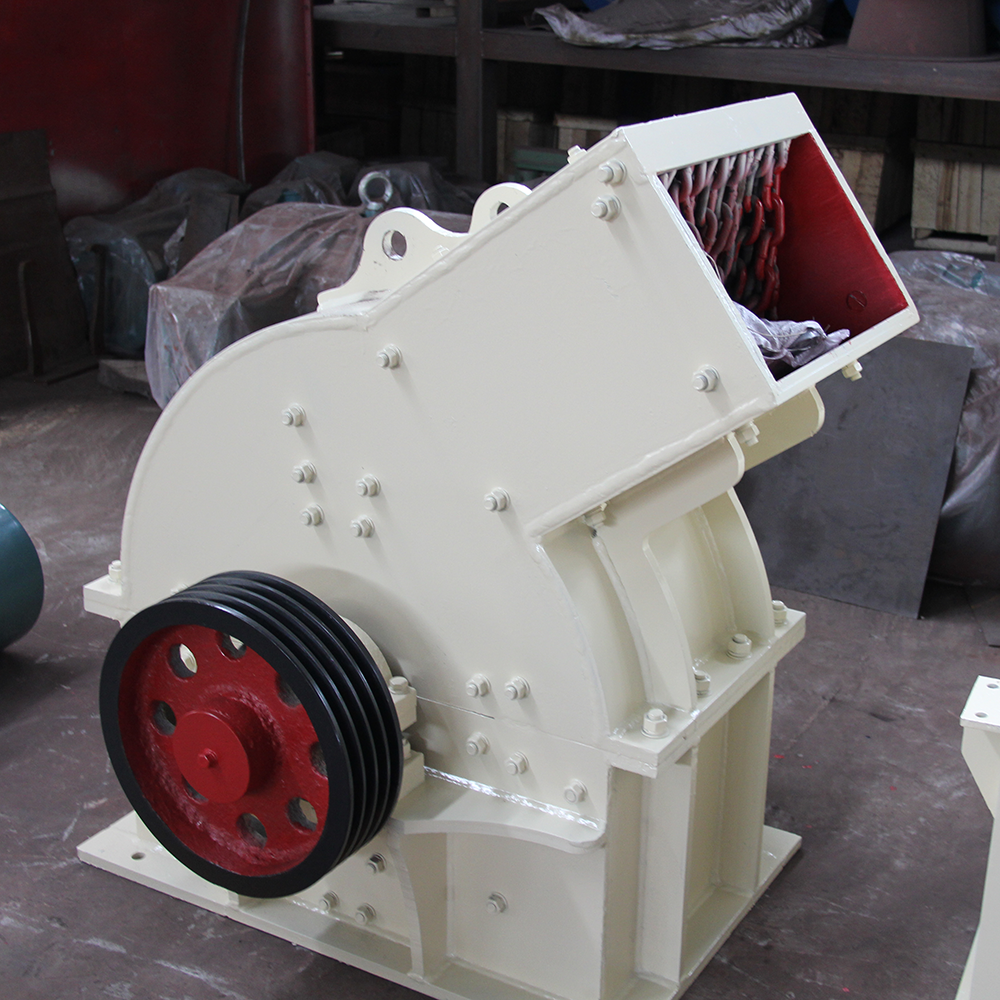
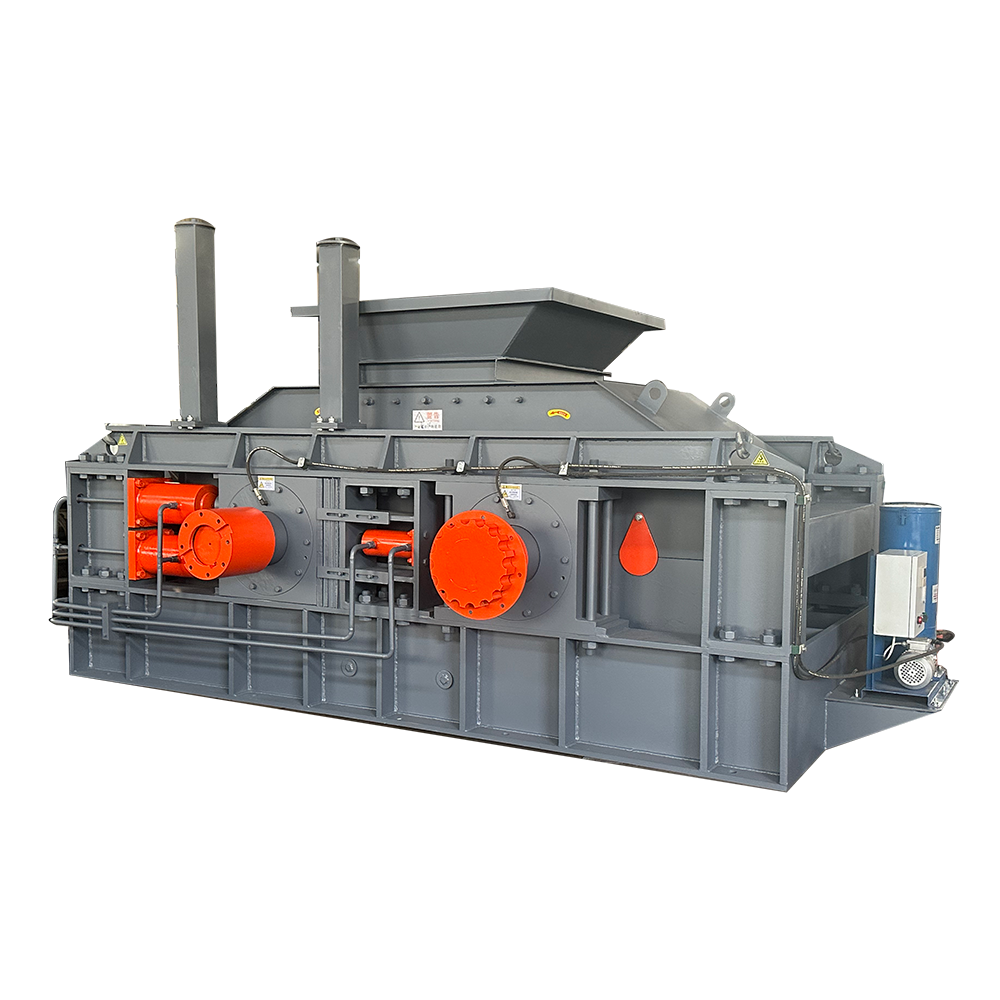
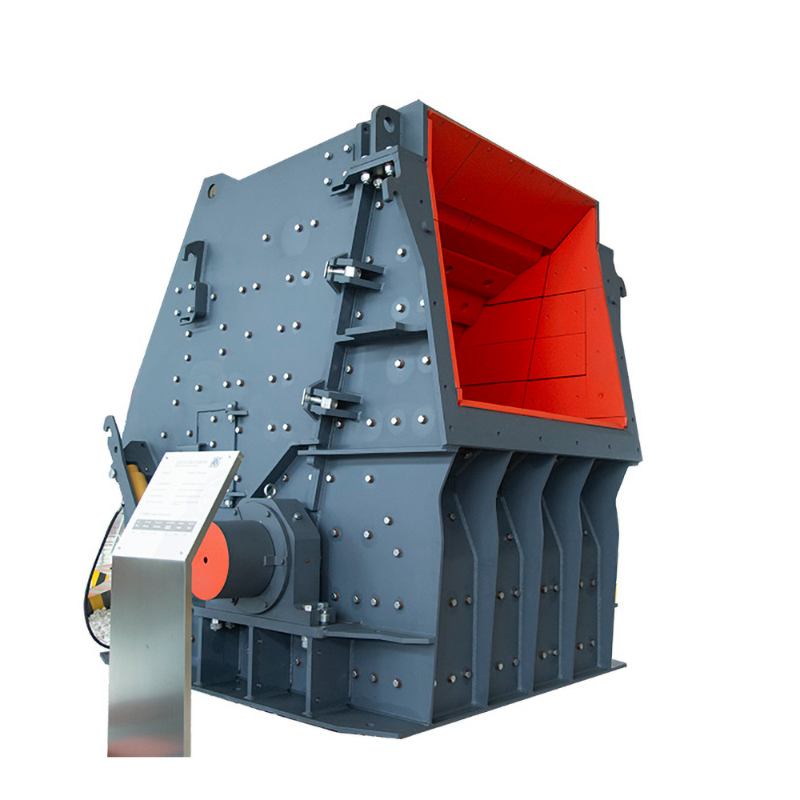
The equipment used in the crushing stage of the ore is quite diverse. It needs to be selected comprehensively based on factors such as the type, hardness of the ore, and the desired finished particle size.
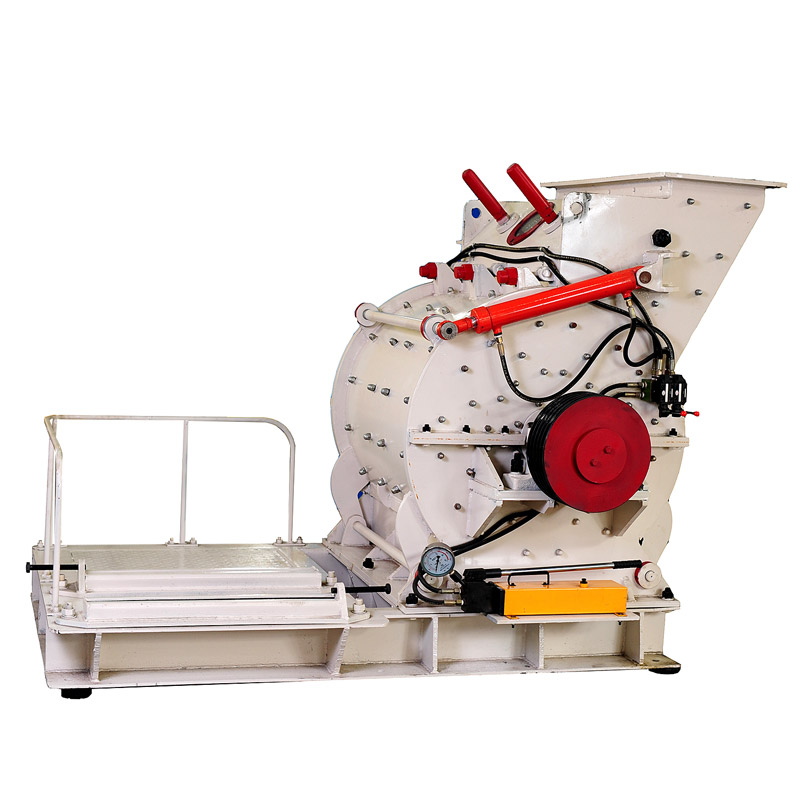
The commonly used equipment mainly includes jaw crushers, hammer crushers, cone crushers, impact crushers, and European-style coarse grinding machines, etc.
2. Medium-Fine Powder Production (80–325 Mesh): Raymond Mill Route
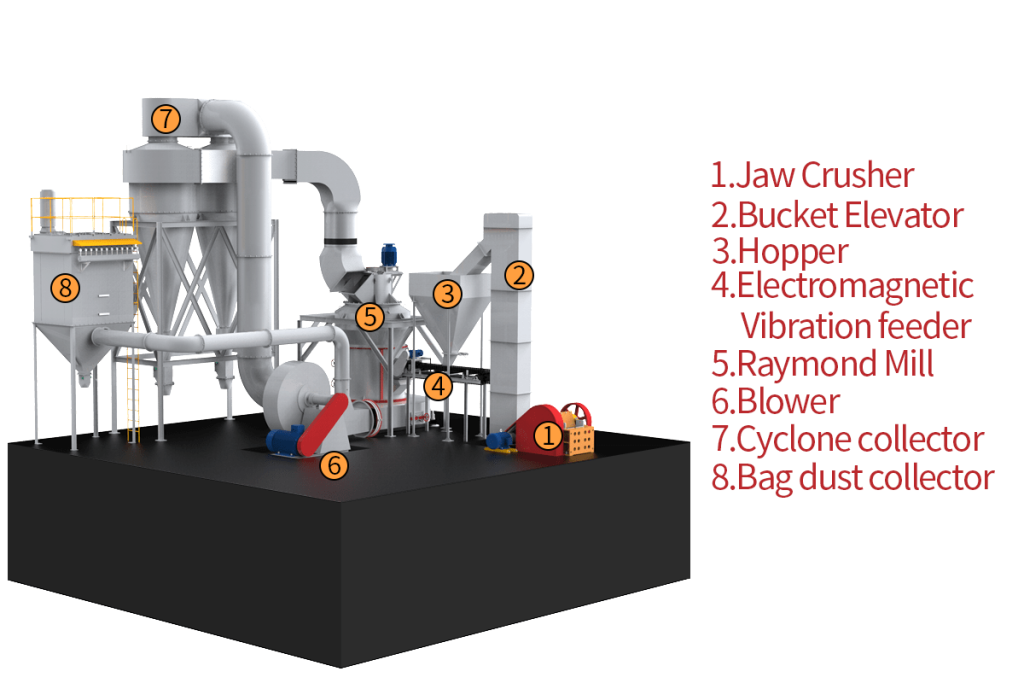
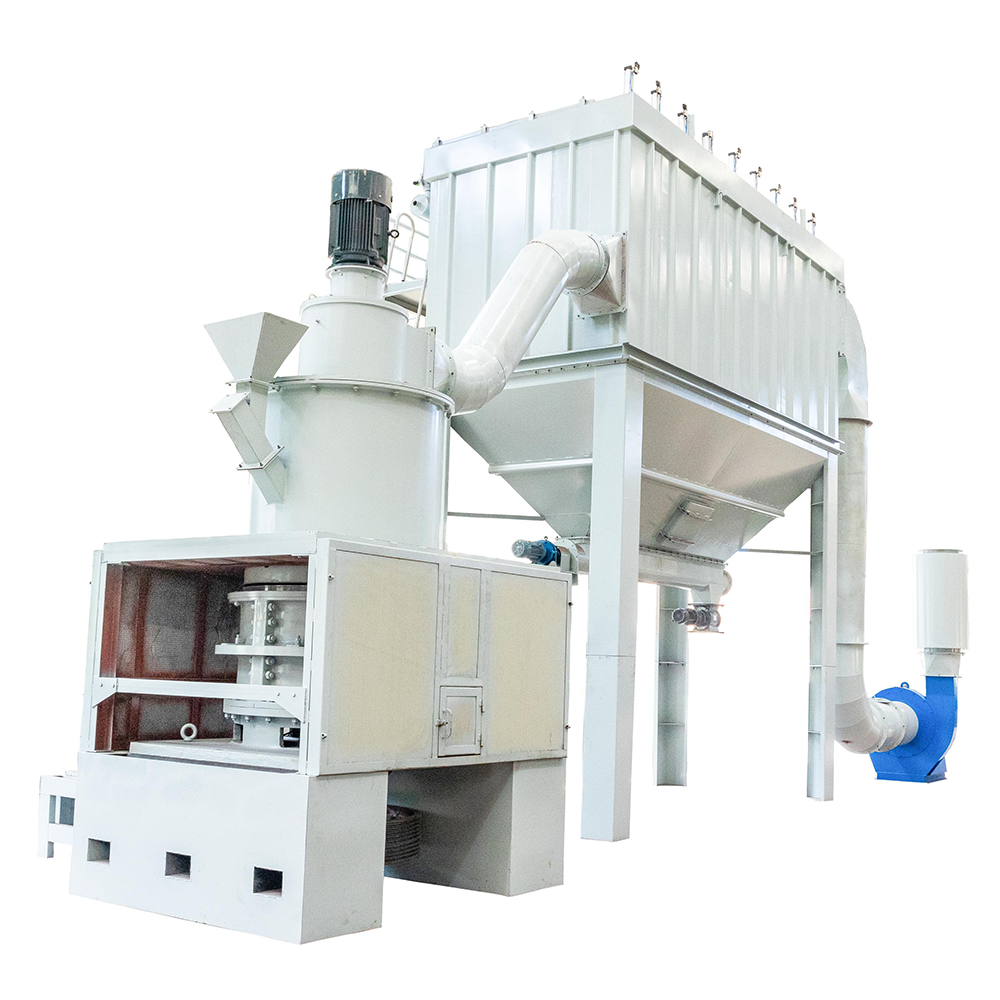
For standard 80–325 mesh stone powder, the Raymond mill is the most cost-effective and widely used solution.
Process flow:
- Quantitative feeding: A vibrating feeder delivers crushed stone evenly and continuously from the hopper into the grinding chamber, avoiding overload or uneven grinding.
- Roller-ring grinding: Inside the mill, grinding rollers revolve around the central shaft and press tightly against the fixed grinding ring under centrifugal force. Material is crushed and ground between rollers and ring by combined extrusion, rolling and shearing forces.
- Air classification: Ground powder is blown upward by system airflow into the built-in classifier. Oversized coarse particles are rejected and fall back into the grinding chamber for re-grinding; only on-spec fine particles pass through.
- Powder collection: Qualified powder flows with air into a cyclone collector, where it is separated and discharged through a rotary valve. Residual fine dust is captured by a pulse bag dust collector.
Typical applications: building fillers, dry mortar, FGD limestone powder, general plastic fillers
4RRM3220 20 0.045~0.18 6950×4570×8295 1~6 45 45 15 CRRM1280 20 – 8400×5650×8200 1.5~10 55 55 15 5R4128 20 – 8660×6050×9250 2~15 90 90 22 CRRM1500 20 – 8700×5500×9250 3~18 110 110 22 CRRM1620A 30 – 9670×5570×10550 5~22 160 132 30 CRRM1700 30 – 9670×5570×10550 6~28 185 160 37 CRRM1850 30 – 10455×6830×9815 6.5~30 200 200 37 CRRM1920 30 – 13312×7690×9815 7.5~33 220 220 45 CRRM2150 30 – 11080×7600×11150 10~40 250 280 45 CRRM2500 35 – 11480×7730×11250 11.5~50 280 280 45 CRRM2750 35 – 17000×11000×15000 15~80 450 450 75
3. Ultrafine Powder Production (325–2500 Mesh): Ultrafine Ring Roller Mill Route
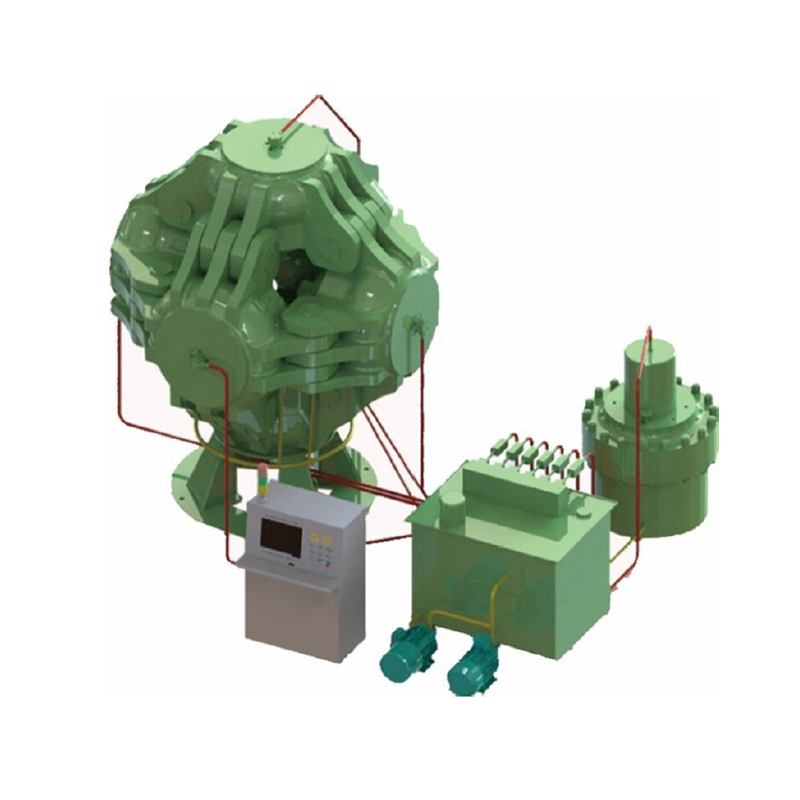
For high-value fine powder above 325 mesh, an ultrafine ring roller mill delivers higher precision and narrower particle size distribution.
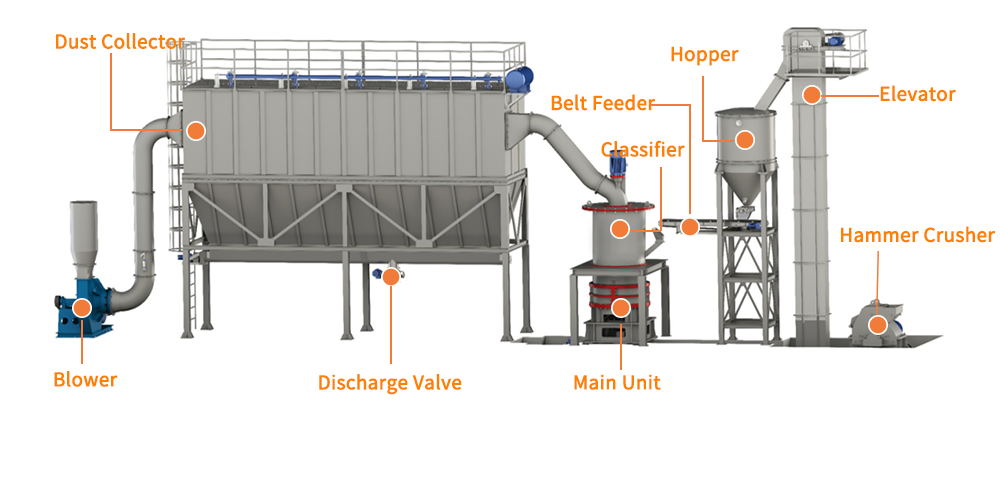
Process flow:
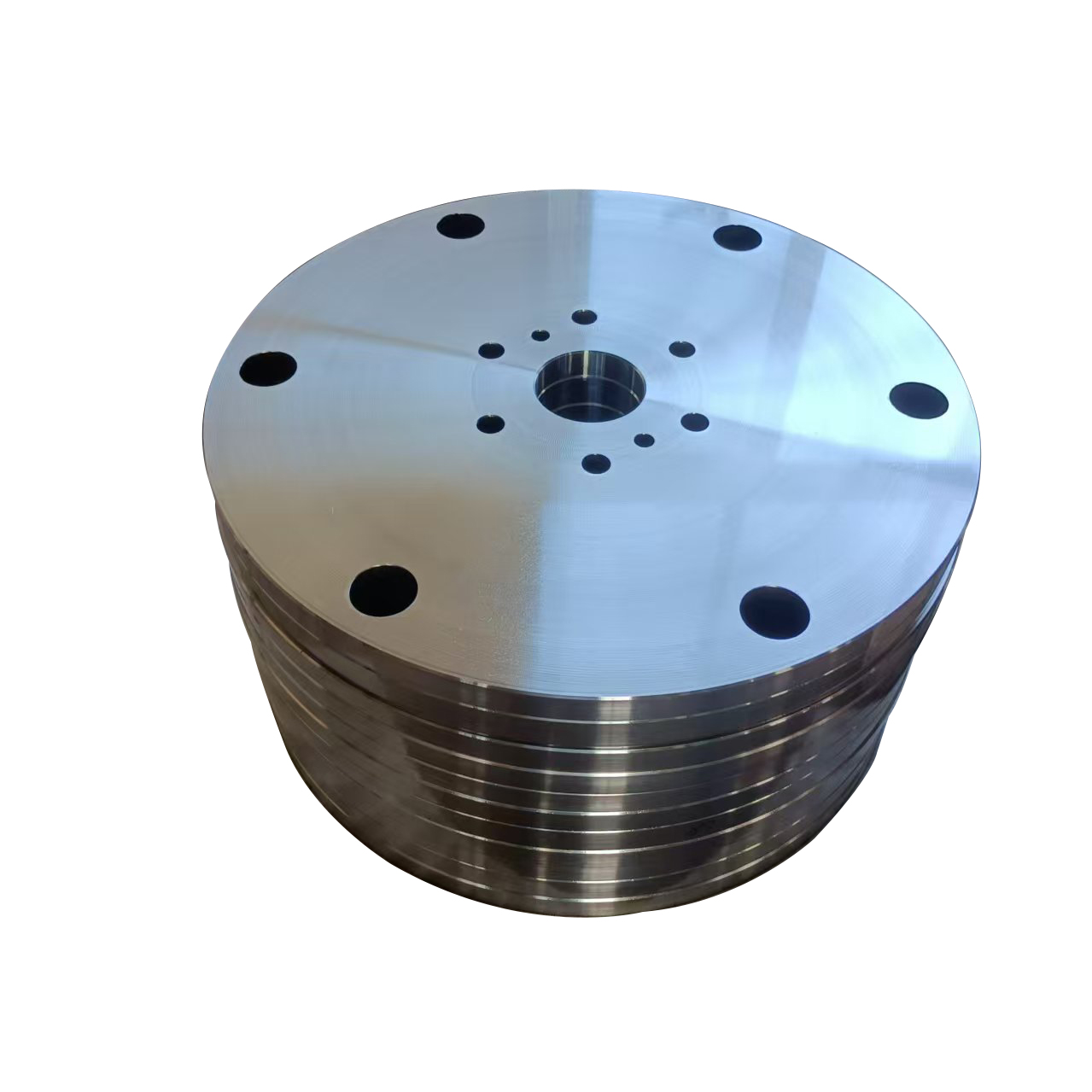
- Multi-layer grinding: The mill adopts 2–4 layers of roller-ring grinding sets. Material passes through each grinding stage from top to bottom, being progressively refined step by step.
- High-precision turbo classification: Ground powder enters the upper classification chamber and passes through a high-speed centrifugal turbo classifier. Fineness is steplessly adjusted by changing the classifier rotation speed.
- Closed-circuit regrinding: Coarse fractions are automatically returned to the grinding zone. This internal circulation ensures uniform particle size and high pass-through rate.
- Dual-stage collection: Finished ultrafine powder is collected first by cyclone separator, then fully recovered by baghouse filter. The entire system runs under negative pressure with zero dust emission.
Typical applications: high-end paint & coating, premium plastic masterbatch, paper coating, lithium battery materials, fine chemical fillers.
Technical parameters of CRONUS ultra-fine grinding machine:
Ring Diameter (mm) 800 900 1000 1000 1300 1680 Ring Number (layer) 3 3-4 3-4 4 4 4 Roller Number (pcs) 21 24-32 27-36 34-40 40-44 44 Input Size (mm) ≤20 ≤20 ≤20 ≤25 ≤25 ≤30 Output Size (mesh) 300-3000 300-3000 300-3000 300-3000 300-3000 300-3000 Capacity (t/h) 0.4-5 0.6-7 0.8-10 1.2-15 2.5-25 5-40 Main Motor (kw) 55-75 90-110 132-160 185-200 250-280 355-400 Fan Motor (kw) 45-55 75-90 90-110 132-160 160-200 220-280 Overall Dimension (m) 10x3x5.5 12×3.5×6 14x4x6.5 14×4.5×7 16x5x7.5 20x6x9
4. Final Packaging & Storage
- Collected finished powder is conveyed to a finished product silo.
- Automatic packaging machines fill powder into 25 kg bags, 1 ton jumbo bags or bulk tanker trucks according to customer requirements.
- For high-whiteness or food-grade products, sealed packaging is used to prevent contamination and moisture absorption.